

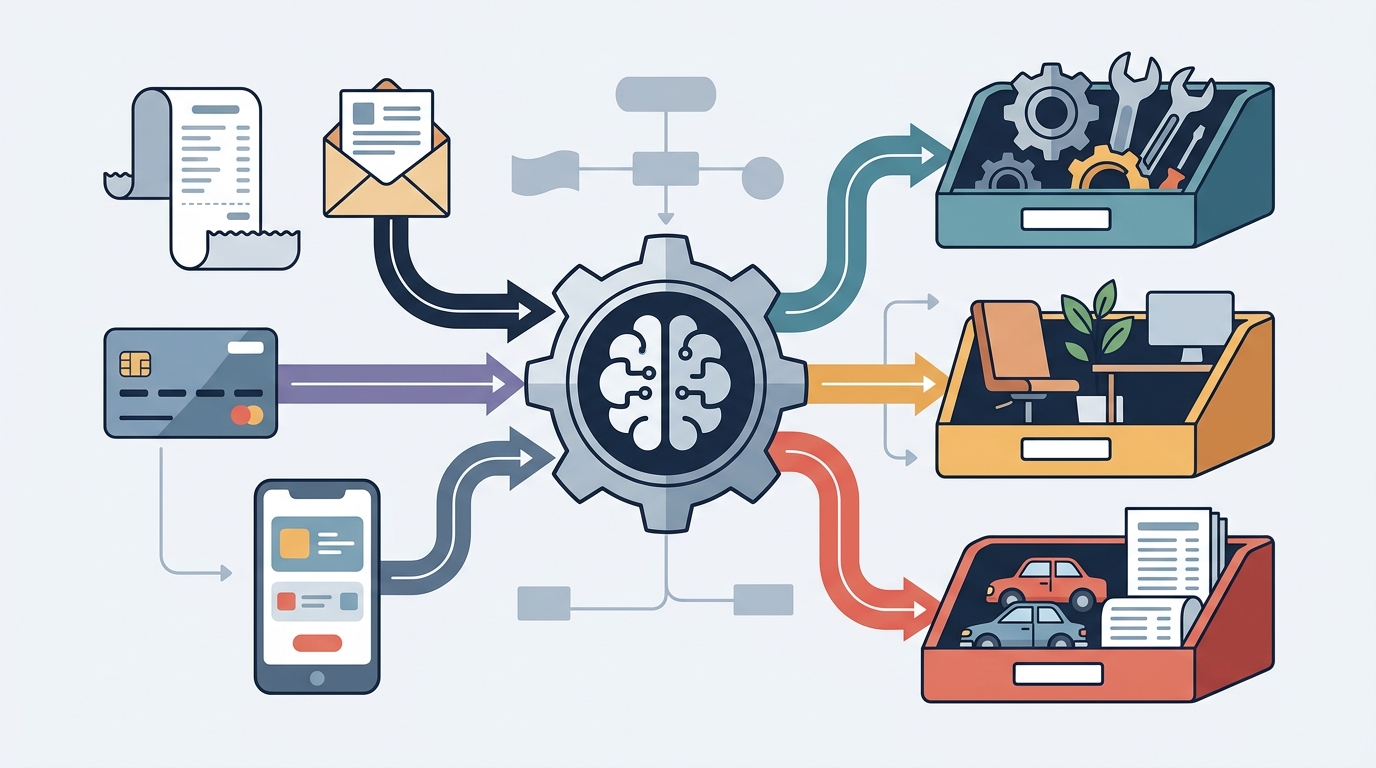
AI expense categorization is the process of using machine learning to automatically sort financial transactions into specific tax categories. For freelancers, this technology identifies business expenses from bank statements and receipts, mapping them to IRS Schedule C line items. This automation reduces manual data entry and ensures that deductible costs are captured accurately throughout the year.
How AI Identifies Business Transactions
The accuracy of this process depends on the quality of the training data. Systems are trained on millions of historical transactions to understand common vendor behaviors. For example, a charge from a major cloud storage provider is likely a software subscription, while a charge from a local coffee shop might be a meal. The AI assigns a confidence score to each categorization, flagging low-confidence items for manual review. This hybrid approach ensures that high-volume, predictable expenses are handled automatically while ambiguous items receive human attention.
At SnapTax, this technology is integrated directly into the expense tracking workflow. Users can upload bank statements, and the platform sorts transactions into Schedule C categories. This feature is available on Builder plans and above, allowing freelancers to save significant time on bookkeeping. The system learns from user corrections, improving its accuracy over time as it adapts to specific spending habits.
Common Schedule C Categories for AI Sorting
Software subscriptions are a major category for many digital freelancers. AI systems recognize vendors like Adobe, Microsoft, and various project management tools. These are typically categorized under "Software" or "Computer and Internet" expenses. Similarly, charges from professional liability insurance providers are mapped to "Insurance" categories. The system distinguishes between personal and business accounts, ensuring that only business-related charges are flagged for deduction.
Travel and mileage are critical areas for AI categorization. The system can identify travel expenses based on vendor types, such as airlines, hotels, and ride-sharing services. For mileage, GPS-based tracking provides precise data on business trips. In 2026, the standard mileage rate is 72.5 cents per mile. Proper documentation of these miles is essential to support the deduction. AI systems can integrate with GPS data to automatically calculate deductible mileage, reducing the risk of underreporting.
Mileage Tracking and Documentation Requirements
Mileage is one of the most common deductions for freelancers who travel for work. The IRS requires that business mileage be properly documented to support the deduction. This means keeping a log of the date, destination, purpose, and miles driven for each business trip. Manual logs are prone to errors and omissions, which can lead to audit issues. AI-powered mileage trackers use GPS data to create an automatic, IRS-compliant audit log.
The 2026 standard mileage rate of 72.5 cents per mile applies to business miles driven during the year. This rate covers the cost of operating a vehicle, including depreciation, gas, oil, and maintenance. Freelancers must distinguish between business and personal miles. AI systems can help with this by allowing users to tag trips as business or personal. The system then calculates the total deductible miles and applies the correct rate. This ensures that the deduction is accurate and defensible in the event of an audit.
Receipt Management and OCR Technology
Receipts are the primary evidence for most business expenses. AI systems use Optical Character Recognition (OCR) to extract key data from receipt images. This includes the vendor name, date, amount, and itemized details. The extracted data is then matched against the corresponding bank transaction. This reconciliation process ensures that every expense is backed by a receipt and that the amounts match.
Freelancers can capture receipts by snapping a photo, emailing them to a dedicated address, or uploading them directly. The AI processes these images in real time, extracting the necessary information. This eliminates the need for manual data entry and reduces the risk of errors. The system also organizes receipts by category and date, making it easy to retrieve them when preparing tax returns. This is particularly useful for freelancers who have a high volume of small expenses, such as office supplies or software subscriptions.
The integration of receipt management with expense categorization creates a closed loop of verification. If a receipt is missing for a flagged expense, the system can alert the user. This helps ensure that all deductions are supported by documentation. For freelancers, this level of automation provides peace of mind and reduces the stress of tax season. SnapTax's receipt management features are designed to work seamlessly with its AI categorization engine, providing a comprehensive solution for expense tracking.
Verifying AI Accuracy and Manual Overrides
While AI categorization is highly accurate, it is not infallible. Freelancers should regularly review the categorized expenses to ensure that the AI is making the correct assignments. This is especially important for ambiguous transactions, such as meals or travel. The system typically flags low-confidence items for manual review. Users can override the AI's decision by reassigning the transaction to a different category.
Manual overrides help the system learn and improve over time. When a user corrects a categorization, the AI records this feedback and adjusts its future predictions. This continuous learning process ensures that the system becomes more accurate for each individual user. It is important to note that SnapTax is tax planning software designed to help freelancers estimate their tax liability and plan quarterly payments. It is not a substitute for professional tax advice. Users should consult a qualified tax professional for personalized guidance.
Regular reviews also help identify any missed deductions. The AI may flag a transaction as personal, but it could actually be a business expense. By reviewing the flagged items, freelancers can ensure that they are not leaving money on the table. This proactive approach to expense management is a key benefit of using AI-powered tax software. It allows freelancers to stay on top of their finances throughout the year, rather than scrambling to organize receipts at the end of the year.
Key Takeaways
- AI expense categorization uses machine learning to automatically sort transactions into IRS Schedule C categories.
- The 2026 standard mileage rate is 72.5 cents per mile, and proper documentation is required to support the deduction.
- GPS-based mileage trackers create IRS-compliant audit logs, reducing the risk of audit issues.
- OCR technology extracts data from receipts, ensuring that expenses are backed by documentation.
- Freelancers should regularly review AI categorizations and use manual overrides to improve accuracy.
- SnapTax provides AI-powered expense tracking, mileage logging, and receipt management for freelancers.
- AI systems learn from user corrections, improving their accuracy over time.
Frequently Asked Questions
What is the 2026 standard mileage rate for business use?
The 2026 standard mileage rate for business use is 72.5 cents per mile. This rate covers the cost of operating a vehicle, including depreciation, gas, oil, and maintenance. Freelancers must keep a log of their business miles to support the deduction.
How does AI categorize bank transactions?
Can AI distinguish between personal and business expenses?
Yes, AI systems are trained to distinguish between personal and business expenses based on vendor types and transaction patterns. However, freelancers should regularly review the categorizations to ensure accuracy, especially for ambiguous transactions.
What is OCR in the context of receipt management?
OCR, or Optical Character Recognition, is a technology that extracts data from receipt images. It identifies the vendor name, date, amount, and itemized details. This data is then matched against the corresponding bank transaction to ensure accuracy.
Is SnapTax a tax preparation service?
No, SnapTax is tax planning software designed to help freelancers estimate their tax liability and plan quarterly payments. It is not a substitute for professional tax advice. Users should consult a qualified tax professional for personalized guidance.
How can I improve the accuracy of AI categorization?
You can improve accuracy by regularly reviewing the categorized expenses and using manual overrides to correct any errors. The system learns from your corrections, improving its future predictions. It is also important to provide clear business purposes for mileage and other expenses.
Conclusion
AI expense categorization is a powerful tool for freelancers looking to streamline their tax planning. By automatically sorting transactions into Schedule C categories, tracking mileage, and managing receipts, AI reduces the time and effort required for bookkeeping. The 2026 standard mileage rate of 72.5 cents per mile highlights the importance of proper documentation. Freelancers should use AI-powered tools to ensure that their expenses are accurately tracked and documented. Contact SnapTax to learn more about how their software can help you manage your freelance taxes.