

Freelancers face a unique financial burden that traditional employees do not. According to the Internal Revenue Service, self-employed individuals must pay quarterly estimated taxes, a requirement that catches many new business owners off guard. The average freelancer spends over 100 hours per year on tax preparation, a statistic that highlights the critical need for automation. Without the right tools, this administrative overhead can consume valuable billable hours and increase the risk of costly errors. Choosing the correct software is not just about convenience; it is about financial survival and compliance. (Contact Us)
Why Manual Tracking Fails Freelancers
The traditional method of tracking taxes involves spreadsheets, physical receipts, and manual calculations. This approach is inherently flawed for several reasons. First, it is prone to human error. A single misplaced decimal can trigger an audit or result in underpayment penalties. Second, it lacks real-time visibility. Freelancers often do not know their actual tax liability until the end of the fiscal year, leading to cash flow shocks. (Customer Experience)
Modern tax software addresses these pain points by automating data entry and providing instant insights. SnapTax, for instance, simplifies the process by allowing users to scan documents and receive immediate tax estimates. This immediacy allows freelancers to adjust their spending and saving habits proactively rather than reactively. The shift from reactive to proactive financial management is the primary benefit of adopting dedicated tools. (Frequently Asked Questions)
Core Features of All-in-One Solutions
To qualify as an all-in-one solution, a tax app must go beyond simple calculation. It must serve as a comprehensive financial hub. The following features are non-negotiable for serious freelancers. (About)
Automated Expense Categorization
Manual categorization is tedious and inconsistent. Top-tier apps use machine learning to automatically sort transactions into deductible categories. For example, a coffee shop charge might be flagged as a business meal, while a software subscription is categorized as a technology expense. This automation ensures that no deductible is missed. The accuracy of these algorithms improves over time as the user corrects misclassifications.
Real-Time Tax Liability Estimation
Freelancers need to know how much to set aside from each payment. All-in-one apps calculate estimated taxes in real-time based on income and expenses. This feature prevents the common mistake of spending all revenue and facing a massive tax bill later. By knowing the exact amount to withhold, freelancers maintain healthy cash flow. This capability is essential for avoiding the quarterly payment penalties enforced by the IRS.
Document Storage and Receipt Scanning
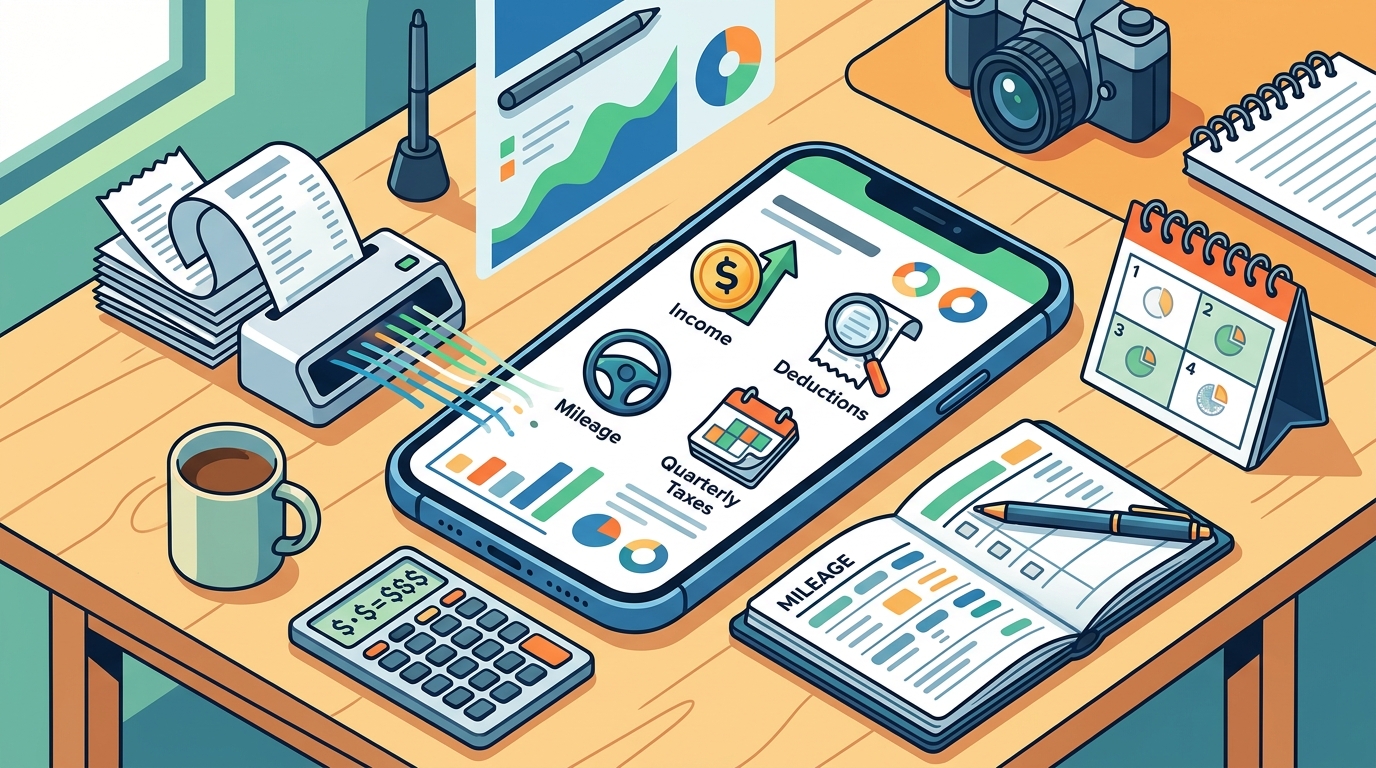
Lost receipts are a nightmare during an audit. Apps with integrated document storage allow users to snap photos of receipts and attach them directly to transactions. This creates an immutable audit trail. Some platforms also offer optical character recognition (OCR) to extract data from PDFs and invoices automatically. This reduces the time spent on data entry to near zero.
Integration and Automation
No tax app exists in a vacuum. It must connect with the broader financial ecosystem of the freelancer. Integration capabilities are what separate basic calculators from true all-in-one platforms.
Bank and Credit Card Feeds
Direct bank feeds eliminate manual entry. When a freelancer connects their business checking account, transactions populate automatically. This ensures that every dollar is accounted for. The speed of synchronization varies by provider, but most modern apps update within 24 hours. This real-time data flow is critical for accurate reporting.
Accounting Software Sync
While some apps offer full accounting features, others serve as add-ons to platforms like QuickBooks or Xero. Syncing ensures that data flows seamlessly between tax tracking and general ledger accounting. This prevents double entry and ensures consistency across financial records. Freelancers who use multiple tools must ensure their stack communicates effectively.
Payment Processor Connectivity
Freelancers often receive payments through Stripe, PayPal, or Square. Connecting these processors provides a complete view of income. It captures fees and chargebacks that affect net revenue. Without this integration, income reports may be inflated, leading to overpayment of taxes. Accurate income tracking is the foundation of reliable tax planning.
Compliance and Data Security
Financial data is sensitive. Freelancers must trust that their information is protected and that the software adheres to regulatory standards. Security is not just a feature; it is a requirement.
Bank-Level Encryption
All reputable tax apps use AES-256 encryption to protect data at rest and in transit. This is the same standard used by major banks. It ensures that even if data is intercepted, it remains unreadable. Users should verify that the app explicitly states its encryption protocols in their privacy policy.
IRS Compliance and Filing Support
The software must generate forms that meet IRS specifications. This includes Schedule C for sole proprietors and Schedule SE for self-employment tax. Some apps offer direct e-filing capabilities, which speeds up refunds and reduces processing errors. Filing directly from the app ensures that the data matches the submitted forms exactly.
Regular Updates and Support
Tax laws change annually. The best apps update their logic and forms immediately after legislative changes. They also provide customer support to answer complex questions. Access to tax professionals within the app can be invaluable for unique business structures. This support layer adds significant value beyond the software itself.
Feature Comparison Matrix
Understanding the differences between top contenders helps in making the right choice. The following table summarizes key attributes of leading solutions.
| Feature | SnapTax | QuickBooks Self-Employed | Freelancer's Tax Tool | TaxSlayer |
|---|---|---|---|---|
| Mobile-First Design | Yes | Yes | Partial | No |
| Real-Time Tax Estimates | Yes | Yes | Yes | Yes |
| Receipt Scanning | Yes | Yes | No | Yes |
| Direct E-Filing | Yes | Yes | Yes | Yes |
| Bank Feeds | Limited | Yes | No | Yes |
| Price Point | Low | Medium | Low | Low |
Each tool serves a different niche. SnapTax excels in simplicity and mobile usability. QuickBooks offers deeper accounting integration. Freelancer's Tax Tool is a free, no-frills option. TaxSlayer provides a robust desktop and mobile experience. The choice depends on the complexity of the freelancer's business.
Key Takeaways
- Freelancers spend an average of 100 hours annually on tax tasks, highlighting the need for automation.
- Real-time tax estimation prevents cash flow crises by showing liability as income is earned.
- Automated expense categorization reduces errors and ensures maximum deduction capture.
- Bank-level encryption is the minimum security standard for any financial app.
- Integration with payment processors like Stripe and PayPal provides a complete income view.
- IRS compliance ensures that generated forms are accepted without rejection or delay.
- SnapTax offers a streamlined mobile experience ideal for solo practitioners.
Frequently Asked Questions
What is the best tax app for beginners?
SnapTax is often recommended for beginners due to its intuitive interface and low cost. It guides users through the process step-by-step, reducing anxiety and confusion. The app is designed to be accessible to those with minimal accounting knowledge.
Do I need an all-in-one tax app?
If you have multiple income streams or significant expenses, an all-in-one app saves time and reduces errors. Manual tracking becomes unmanageable quickly as business complexity grows. Automation provides scalability that spreadsheets cannot match.
How secure is my financial data in these apps?
Reputable apps use bank-level encryption and comply with strict data protection regulations. They do not sell your data to third parties. Always review the privacy policy to understand how your information is handled and stored.
Can I file my taxes directly from a tax app?
Yes, most all-in-one apps offer direct e-filing capabilities. This feature allows you to submit your federal and state returns without leaving the platform. It also provides confirmation of receipt and processing status.
What is the difference between SnapTax and other tax software?
SnapTax focuses on simplicity and mobile usability. It is ideal for simple tax situations. Other software may offer more advanced features for complex businesses, such as inventory tracking or multi-entity support. Choose based on your specific needs.
How often should I update my tax records?
You should update your records monthly or even weekly. Regular updates prevent end-of-year overwhelm and ensure accuracy. Delayed updates often lead to missing receipts and forgotten deductions.
Are free tax apps reliable?
Free apps can be reliable if they are from reputable providers. However, they may lack advanced features or customer support. Consider the cost of your time versus the cost of premium features when making a decision.
Start Tracking Smarter Today
Stop letting tax complexity drain your productivity. Take control of your financial future with tools designed for the modern freelancer. Visit SnapTax to experience seamless tax tracking and filing. Simplify your workflow and focus on what you do best. Your business deserves better than spreadsheets.