

Freelancers and 1099 workers often overlook the financial impact of their workspace. The home office deduction is a tax benefit that allows self-employed individuals to deduct a portion of their home expenses if they use a specific area exclusively and regularly for business. In 2026, the IRS provides two primary methods for calculating this deduction, along with specific rules for shared spaces and equipment. Understanding these options helps you maximize your tax savings while staying compliant with federal guidelines.
1. The Regular Method for Exclusive Use
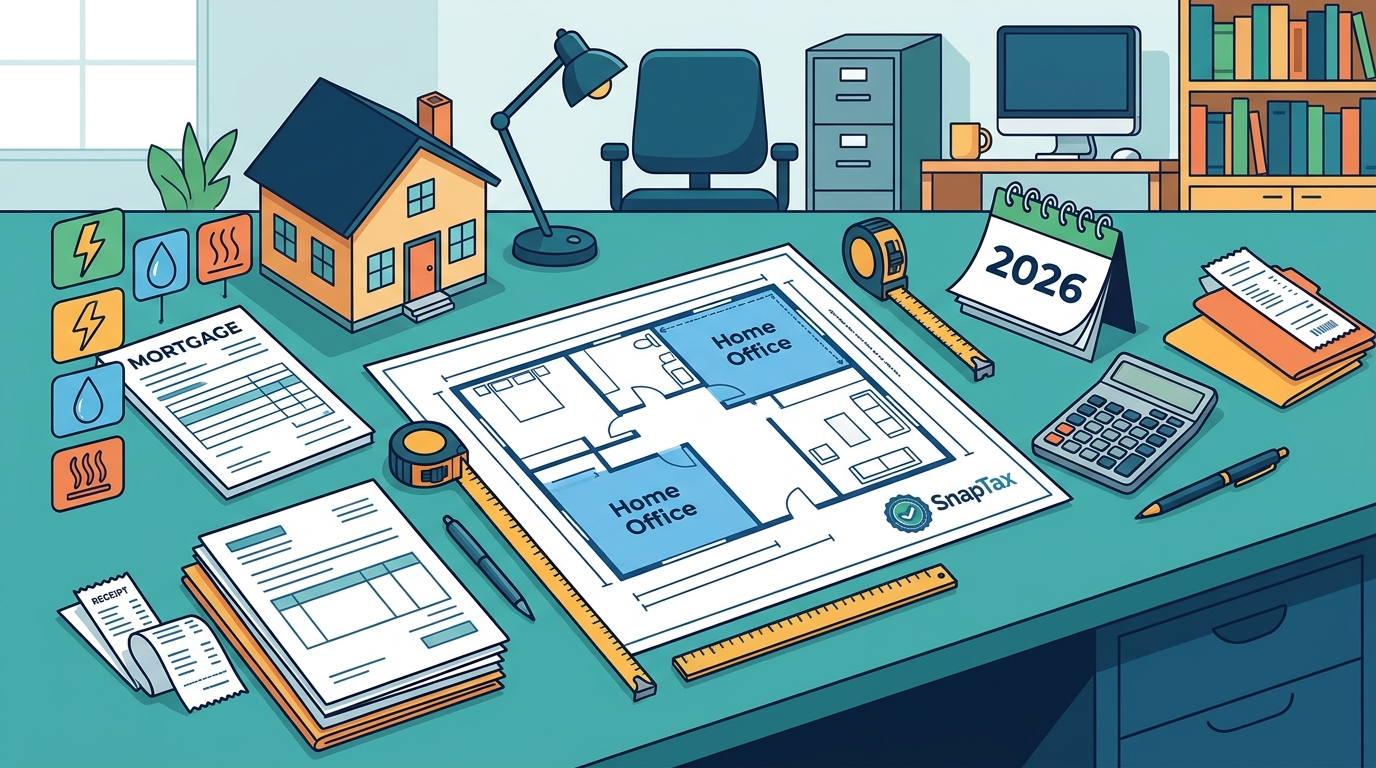
Use this method if you have a dedicated room or clearly defined area used only for business. The regular method calculates your deduction based on the percentage of your home used for business. You measure the square footage of your home office and divide it by the total square footage of your home. This percentage is then applied to your actual home expenses, including mortgage interest, rent, utilities, insurance, and repairs. This method often yields a higher deduction but requires detailed record-keeping of all home-related costs.
2. The Simplified Method for Quick Estimates
3. Deducting Home Office Equipment
Claim the cost of furniture and technology used exclusively in your home office. Beyond the space itself, you can deduct the cost of items like desks, chairs, computers, and software. If you purchase expensive equipment, you may qualify for Section 179 expensing, which allows you to deduct the full cost in the year of purchase rather than depreciating it over time. For 2026, the Section 179 limit is $2,560,000, meaning most freelancers can deduct their entire equipment budget immediately. Tracking these assets is crucial for accurate tax planning.
4. Shared Space and Partial Use Rules
Understand the strict requirements for using a shared area for business purposes. The IRS requires that the space be used exclusively for business. This means you cannot use a bedroom as a home office if you also sleep in it. However, if you use a portion of a room exclusively for business, you may be able to deduct that portion. For example, if you use a desk in your living room solely for work, you can deduct the percentage of the room occupied by that desk. Documentation is key, so keep photos and floor plans to support your claim.
5. Home Office and Mileage Interactions
Combine your home office deduction with mileage deductions for a complete tax picture. Your home office deduction reduces your taxable income, which can lower your overall tax bracket. Additionally, if you drive from your home office to client sites or temporary work locations, those miles are deductible. For 2026, the IRS standard mileage rate is $0.725 per mile for January through June and $0.76 per mile for July through December. Proper documentation of both your home office usage and your mileage log ensures you capture all eligible deductions.
Choosing the Right Method for Your Situation
Select the method that best fits your record-keeping habits and financial situation. If you have high home expenses and a large dedicated office, the regular method may save you more money. If you prefer simplicity and have a smaller workspace, the simplified method is often the better choice. You must choose one method for the entire year and cannot switch back and forth between methods without IRS approval. Consulting with a tax professional can help you determine which approach maximizes your savings.
Frequently Asked Questions
Can I deduct my home office if I work from a shared space?
You can deduct a portion of a shared space if you use a specific area exclusively for business. For example, a desk in a living room can be deducted based on the percentage of the room it occupies. However, you cannot deduct a room if you use it for personal activities like sleeping or watching TV.
What is the maximum deduction for the simplified method in 2026?
Do I need to track my home office expenses for the regular method?
Yes, the regular method requires you to track all home-related expenses, including mortgage interest, rent, utilities, and insurance. You apply the business-use percentage to these costs to calculate your deduction. Accurate record-keeping is essential to support your claim in case of an audit.
How does the home office deduction affect my quarterly taxes?
The home office deduction reduces your net profit, which lowers your taxable income and self-employment tax. By tracking this deduction in real time, you can adjust your quarterly estimated tax payments to avoid underpayment penalties. Tools like SnapTax help you see the impact of your deductions on your tax liability throughout the year.
Can I deduct my home office if I have a W-2 job?
You can deduct your home office if you are self-employed and use the space exclusively and regularly for business. Having a W-2 job does not disqualify you, but you must meet the IRS requirements for self-employment. The deduction is claimed on Schedule C, not on your W-2 income.
Start Planning Your Home Office Deduction
Maximizing your tax savings requires accurate tracking and real-time visibility into your deductions. SnapTax is designed to help freelancers and 1099 workers manage their home office expenses and see the impact on their quarterly tax estimates. To get started, try SnapTax free and see how your deductions reduce your tax liability.