

Freelancers and independent contractors face a unique financial challenge that W-2 employees rarely encounter. The United States operates on a pay-as-you-go tax system. This means the government expects you to pay your taxes as you earn income throughout the year. If you fail to meet these obligations, the IRS imposes underpayment penalties. These penalties are not optional fees. They are calculated based on the amount of tax underpaid and the length of time it remains unpaid. Avoiding these penalties requires proactive planning and accurate estimation. (SnapTax Freelancer Tax Planning)
Understanding the Basics of Estimated Taxes
Self-employment tax is a significant component of your financial liability. This tax covers Social Security and Medicare contributions. For most freelancers, this rate is 15.3% of your net earnings. On top of this, you owe federal and potentially state income tax. The IRS does not withhold these amounts from your freelance payments. You are responsible for calculating and remitting them yourself. (SnapTax Freelancer Tax Planning)
Estimated taxes are the mechanism the IRS uses to collect this revenue. You must pay these taxes four times a year. The goal is to pay enough throughout the year to avoid a surprise bill in April. Underpayment penalties accrue when your total payments fall short of your actual tax liability. The interest rates on these penalties are set quarterly by the IRS. They can compound quickly if left unaddressed.
According to the Internal Revenue Service, individuals who do not pay enough tax through withholding or estimated tax payments will be charged a penalty. This penalty is essentially an interest charge for the government's use of your money. It applies regardless of whether you owe a balance when you file your return. The key to avoidance is consistency and accuracy.
The Safe Harbor Rules Explained
The IRS provides specific "safe harbor" rules that allow you to avoid penalties if you meet certain criteria. These rules are designed to protect taxpayers who make a good-faith effort to pay their taxes. Understanding these thresholds is critical for financial safety.
The first safe harbor rule applies to most taxpayers. You can avoid penalties if you pay at least 90% of the tax that shows on your current year's tax return. This is the most straightforward method. If your income is stable, this percentage is usually easy to hit. However, if your income fluctuates significantly, this method might require a large final payment.
The second safe harbor rule is based on the previous year's tax liability. You can avoid penalties if you pay 100% of the tax shown on your prior year's return. This is particularly useful for freelancers with steady income. It provides a predictable baseline for your quarterly payments. You do not need to estimate your current year's income as precisely.
There is a crucial exception for high-income earners. If your adjusted gross income from the previous year exceeds $150,000, the requirement increases to 110% of the prior year's tax. This rule prevents wealthy individuals from underpaying based on lower past incomes. Freelancers must check their adjusted gross income to determine which threshold applies to them.
Key Quarterly Tax Deadlines
Missing a deadline is the fastest way to incur a penalty. The IRS has strict dates for estimated tax payments. These dates do not change based on your personal schedule. You must adhere to them regardless of weekends or holidays.
| Quarter | Payment Deadline | Income Period Covered |
|---|---|---|
| First Quarter | April 15 | January 1 - March 31 |
| Second Quarter | June 15 | April 1 - May 31 |
| Third Quarter | September 15 | June 1 - August 31 |
| Fourth Quarter | January 15 | September 1 - December 31 |
Notice that the fourth quarter payment is due in January of the following year. This allows you to make final adjustments before filing your annual return in April. However, any remaining balance is still due when you file your tax return. The January payment is an estimated payment, not a final settlement.
If a deadline falls on a weekend or a legal holiday, the payment is due on the next business day. The IRS publishes a calendar of these dates annually. You should bookmark these dates in your calendar. Set up reminders at least two weeks in advance. This buffer allows time for bank transfers and processing delays.
Tracking Income and Deductions
Accurate estimation requires accurate data. You cannot calculate what you owe if you do not know what you have earned. Manual tracking using spreadsheets is prone to error. It is also time-consuming and difficult to maintain in real-time. This is where specialized software becomes essential.
SnapTax is tax planning software built specifically for freelancers, gig workers, and 1099 independent contractors. It tracks income and business expenses throughout the year and calculates a real-time federal and state tax estimate. By using a tool like SnapTax, you can see your projected tax liability as it changes. This visibility allows you to adjust your payments before penalties accrue.
Expense tracking is equally important. Deductions reduce your taxable income. Common deductions for freelancers include home office expenses, internet bills, software subscriptions, and professional development costs. The IRS allows you to deduct ordinary and necessary business expenses. Keeping detailed records ensures you claim every dollar you are entitled to.
AI expense categorization is a feature found in advanced tax software. You can upload bank statements in CSV, PDF, or OFX formats. The software then sorts transactions into Schedule C categories automatically. This reduces the manual labor of categorization. It also minimizes the risk of misclassifying personal expenses as business deductions, which can trigger audits.
Methods for Making Quarterly Payments
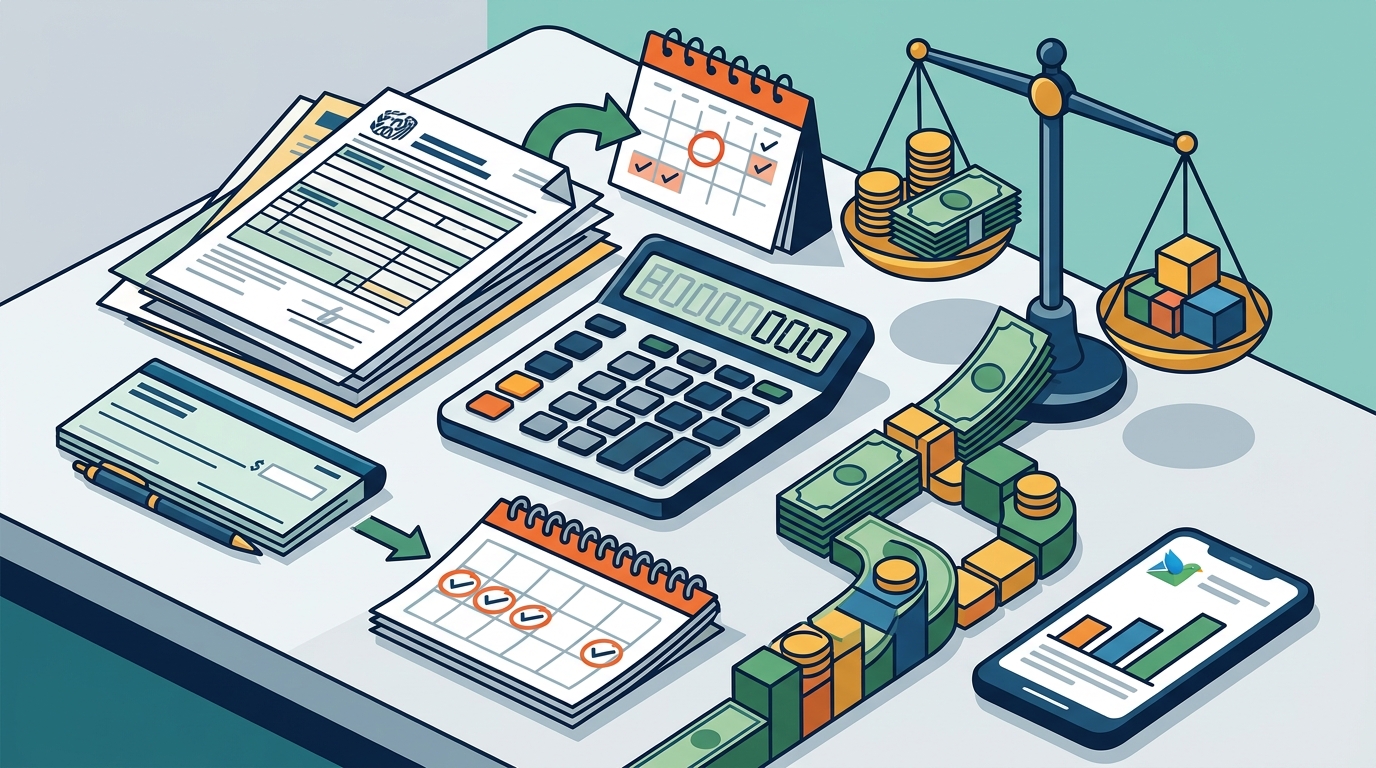
Once you have calculated your estimated tax, you must choose a payment method. The IRS offers several convenient options for freelancers. The most common method is the Electronic Federal Tax Payment System (EFTPS). This is a free service provided by the U.S. Department of the Treasury. You can schedule payments online or by phone. EFTPS provides confirmation numbers for every transaction. This proof of payment is vital in case of disputes.
Another option is paying by credit or debit card. Third-party processors facilitate these payments. While convenient, these services charge a processing fee. For large payments, these fees can add up. However, the convenience of immediate confirmation may outweigh the cost for some freelancers.
You can also pay by mail using IRS Form 1040-ES. This voucher must be included with your check or money order. Mail payments carry the risk of loss or delay. The IRS does not guarantee that mailed payments will arrive by the deadline. If you choose this method, send your payment well in advance. Use certified mail to track the delivery.
Regardless of the method, you must specify the tax year and the quarter for which you are paying. Incorrect allocation can lead to your payment being applied to the wrong period. This can result in a perceived underpayment and subsequent penalties. Always double-check the details before submitting.
Common Mistakes That Lead to Penalties
Even experienced freelancers make errors that trigger penalties. Recognizing these pitfalls can help you avoid them. One common mistake is underestimating income. Freelancers often forget to include side gigs or irregular payments. This leads to a shortfall in quarterly payments. You must account for all sources of 1099-NEC and 1099-K income.
Another mistake is ignoring state taxes. Many freelancers focus solely on federal taxes. However, most states also require estimated tax payments. The deadlines and thresholds vary by state. Failing to pay state taxes can result in separate penalties. You must research the requirements for your specific state of residence.
Some freelancers wait until the last minute to make payments. Bank processing times can delay the arrival of funds. If your payment is not received by the deadline, you are penalized. Do not rely on same-day processing. Schedule your payments at least a few days before the due date.
Finally, some freelancers assume that a tax refund from the previous year covers their current year's liability. This is not always true. If your income has increased, your previous refund may be insufficient. You must recalculate your liability based on current earnings. Do not rely on past data without verification.
Key Takeaways
- Pay at least 90% of your current year's tax liability to avoid penalties.
- Pay 100% of your prior year's tax liability if your income is stable.
- High-income earners with AGI over $150,000 must pay 110% of prior year taxes.
- Quarterly deadlines are April 15, June 15, September 15, and January 15.
- Use EFTPS for free, secure, and trackable tax payments.
- Track all income sources, including 1099-NEC and 1099-K forms.
- Account for both federal and state tax obligations.
Frequently Asked Questions
What is the penalty rate for underpaying quarterly taxes?
The penalty rate is determined by the federal short-term interest rate plus 3 percentage points. The IRS adjusts this rate quarterly. It is essentially an interest charge on the underpaid amount.
Can I avoid penalties if I owe less than $1,000 when I file?
Yes. If the tax you owe after withholding and estimated payments is less than $1,000, and you paid at least 90% of the current year's tax or 100% of the prior year's tax, you may not owe a penalty. However, this is a narrow exception.
How do I calculate my estimated tax payment?
You can use IRS Form 1040-ES to calculate your estimated tax. This form helps you estimate your income, deductions, and credits. Alternatively, tax software like SnapTax can automate this calculation using current IRS tables.
What happens if I miss a quarterly payment deadline?
If you miss a deadline, you will be charged a penalty for that quarter. The penalty accrues from the due date until the payment is made. You should pay as soon as possible to minimize the penalty.
Do I need to pay estimated taxes if I have a W-2 job?
You may need to pay estimated taxes if you have significant freelance income. If your W-2 withholding is not enough to cover your total tax liability, you must make estimated payments to avoid penalties.
How does SnapTax help avoid penalties?
SnapTax provides real-time federal and state tax projections. It tracks your income and deductions automatically. This allows you to adjust your payments throughout the year to stay on track with IRS requirements.
Can I make estimated tax payments online?
Yes. You can pay online through the IRS EFTPS website or by using tax software that integrates with IRS payment systems. Online payments provide immediate confirmation and tracking.
Get Started with SnapTax
Avoiding quarterly tax penalties requires discipline and the right tools. SnapTax simplifies the process by providing real-time tax estimates and automated expense tracking. Stop guessing and start planning. Visit SnapTax.com to start your free trial and take control of your freelance taxes today.